Asset guides
Earn Bitcoin: the yield problem nobody advertises
Bitcoin issues nothing to holders. Every rate you are offered on BTC is someone else's borrowing cost, which is why the honest published numbers sit between 0.02% and 0.25% and the exciting ones come with conditions.
CEX.IO Savings pays 0.25% on BTC and is not available to US residents. Rates are variable.
Figures on this page checked 16 September 2026
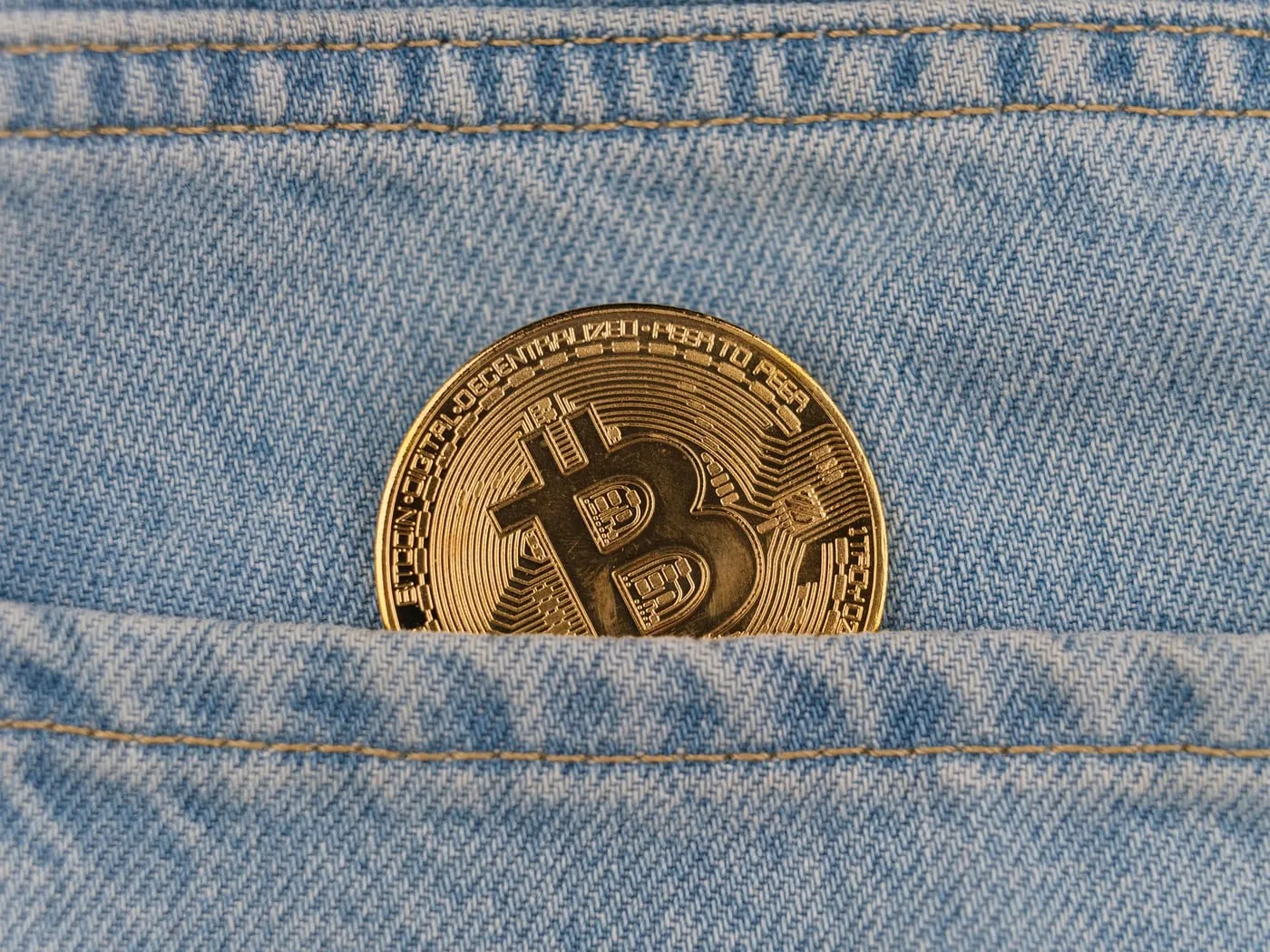
If you want to earn Bitcoin on Bitcoin you already own, you are asking a narrower question than most guides admit. Ethereum, Solana and every other proof-of-stake network pays stakers out of newly issued tokens. Bitcoin does not. It uses proof of work, miners receive the block subsidy, and no part of the protocol sends anything to someone holding coins in an account. That single design fact removes the entire first engine of crypto yield from the table.
What is left is credit. Every BTC interest rate in this guide exists because somebody borrowed bitcoin and agreed to pay for it — a margin trader, a retail borrower posting collateral, an institution running a basis trade. Your rate is their cost, minus the platform's margin. So the sensible way to read a BTC rate is not "how much can I get" but "who is paying this, and what happens to me if they stop".
Key takeaways
- Bitcoin has no native staking mechanism, so every BTC yield product is a lending or credit product rather than a protocol reward.
- On Aave v3 on Ethereum, WBTC and cbBTC both showed a 0.00% supply APY on 16 September 2026, with $2.58bn and $1.38bn supplied at roughly 2.3% and 0.7% utilisation.
- The clearest CeFi BTC rates are also the lowest: Xapo Bank 0.25%, CEX.IO 0.25% and Kraken 0.02% flexible / 0.04% bonded.
- Ledn discontinued its BTC Growth Accounts on 1 July 2025 and now pays yield only on stablecoins, funded by its bitcoin-backed retail loan book.
- Rates above about 4% on BTC — Nexo up to 4.7% flexible and 7% fixed, YouHodler up to 4.8% — attach a loyalty tier, a fixed term, a native-token holding or a loan you have to take out first.
- A 3-month US Treasury bill paid 3.97% on 15 September 2026, which is the benchmark any BTC rate should be judged against before risk is even considered.
Why Bitcoin yield is structurally scarce
Proof-of-stake networks have a budget for paying holders. The protocol mints new tokens and hands them to validators, which is why Ethereum staking can pay a 2.46% network APR without anyone taking on credit risk, and why ourcross-asset staking comparison can quote nominal rates up to 19.6% on smaller chains. Bitcoin has no such budget. The block subsidy goes to miners who spend real electricity, and it halves on a fixed schedule.
That leaves lending, and lending needs borrowers. Here the second structural problem appears: demand to borrow bitcoin is thin, while demand to borrow against bitcoin is strong. Someone who is bullish on BTC wants dollars now without selling, so they post BTC as collateral and borrow stablecoins. Almost nobody wants to be short bitcoin badly enough to pay a meaningful rate to borrow it.
DeFi shows this with unusual clarity, because the rates are set mechanically rather than by a marketing team. Supply APY in a pooled lending market is borrow APY multiplied by utilisation, less the protocol's reserve factor. The numbers below are from Aave v3 on Ethereum, checked 16 September 2026.
What the CeFi Bitcoin rates actually are
Centralised platforms can and do pay more than zero, because they are not passing through a utilisation curve — they are running a balance sheet, and part of what you receive may be marketing spend rather than borrower interest. The table below sets out every BTC rate we could verify, with the condition attached to each.
| Provider | Product | Verified BTC rate | Condition attached | Yield source stated? | Lock-up |
|---|---|---|---|---|---|
| Kraken | Flexible / bonded staking | 0.02% / 0.04% | Pre-commission estimate; flexible stakes up to 50% of your balance; 30% commission on flexible, 25% at the first bonded tier | Yes — Babylon protocol | None flexible; 3 days or more bonded |
| Xapo Bank | BTC Savings | 0.25% | None stated; no minimum, paid daily | Not stated for BTC Savings | None |
| CEX.IO | Savings | 0.25% | Redeeming on a given day forfeits that day's reward | No | None |
| Crypto.com | Crypto Earn | up to 1.5% | Tier 1 only — full rate on the first US$3,000, half on the next US$27,000, 0.3× of that above US$30,000; minimum 0.005 BTC | No | Flexible, 1-month or 3-month |
| Xapo Bank | BTC Credit Fund | target up to 4% | Explicitly a target, not a guarantee; minimum USD 120,000 equivalent in BTC | Yes — lending pooled member BTC to well-capitalised financial institutions | Monthly distribution or reinvestment |
| Nexo | Flexible / fixed-term | up to 4.7% / 7% | Base rate plus loyalty tier, plus up to 2% for taking interest in NEXO, plus 1% for a one-month term; $5,000 portfolio minimum | No | None flexible; term applies to fixed |
| YouHodler | Savings | up to 4.8% | Third-party verified 7 May 2026; the advertised step to 7.2% requires taking a Turbocharge or crypto loan first | Only via third parties — spread on its own lending book | Not published |
| Ledn | BTC Growth Account | withdrawn | Discontinued 1 July 2025 along with ETH Growth Accounts and ETH-backed loans | Not applicable | Not applicable |
Provider documentation and, where marked, dated third-party verification. All figures checked 16 September 2026 unless another date is given. Rates are variable.
Two things stand out. First, the providers who explain where the money comes from publish the lowest numbers. Xapo tells you its US dollar savings rate of 3.35% is funded by AAA-rated US Treasury bills and money market funds, and in the same breath tells you BTC pays 0.25%. That is not a worse product; it is a more honest one. Second, the providers with the highest headline BTC numbers — Nexo and Crypto.com — are also the two in this set that do not disclose their yield source at all. The pattern holds acrosscrypto savings accounts generally.
The conditions that shrink a headline BTC rate
Four mechanisms do almost all the work of turning an advertised number into a smaller real one, and BTC products use all four.
Balance tapers. Crypto.com applies its full advertised rate to the first US$3,000 of a fixed-term position, 0.5× to the next US$27,000, and 0.3× of that above US$30,000. On a $100,000 BTC allocation, the headline applies to 3% of the balance.
Partial deployment. Kraken's flexible staking discloses that it "will only stake a portion of your assets" and that you will receive rewards on up to 50% of what you choose to stake. An advertised flexible rate can therefore overstate the effective yield on your full balance by up to a factor of two.
Commission. Kraken takes 30% of rewards on flexible staking and Auto Earn, and 25% at the first bonded tier, falling to 0% above $100m of assets. On a 0.04% gross rate the absolute numbers are trivial, but the proportion is not, and the same commission structure applies across the assets covered in ourinterest rates comparison.
Conditional uplifts. Nexo's best BTC numbers require a loyalty tier — which means holding NEXO at 1%, 5% or 10% of your portfolio — plus taking your interest in NEXO and committing to a fixed term. YouHodler's blog describes raising BTC from 4.8% to 7.2%, but only after you have taken at least one Turbocharge or crypto loan and contacted support with the Loan ID. That is a savings rate conditioned on first taking leveraged risk, which is a materially different product from the one the headline implies.
The 2022 lesson, and why it matters more for BTC than for anything else
Bitcoin interest accounts were the centre of gravity of the last credit cycle, and they were the products that failed. Celsius advertised up to 17–18% and claimed a $750m insurance policy that did not exist; it froze withdrawals on 12 June 2022 and filed for Chapter 11 on 13 July 2022. BlockFi's Interest Account paid up to roughly 8–9% and had already been found unlawful — a $100m settlement with the SEC and 32 states in February 2022 — nine months before it filed. Voyager told customers their deposits were "FDIC-insured"; over $1bn of customer crypto was lost.
The part that is still under-explained is what recovery meant. BlockFi creditors were announced as receiving 100% recovery in September 2024, but that is 100% of a US dollar claim valued at the petition date in 2022. Customers were made whole in dollars at 2022 prices and missed everything that happened to the bitcoin price afterwards. The only cohort in that era who got their coins back in kind were Gemini Earn users, when Gemini announced full in-kind recovery of over $2bn in May 2024. We set out the full sequence onwhat happened to Celsius, BlockFi, Voyager and Genesis.
The relevance to a BTC decision today is direct. If you are holding bitcoin because you think it appreciates, then a counterparty failure does not cost you the 1% or 4% you were earning. It converts your bitcoin into a dollar claim fixed at whatever the price was on the day the lawyers arrived. That asymmetry is the single strongest argument for treating BTC yield as a small, deliberately sized position rather than a default setting — a point developed further on passive income with crypto.
The protocol layer, in one paragraph
There is a second route to BTC yield that does not run through a company balance sheet: protocols that use timelocked bitcoin as slashable security for other chains, and the wrapped tokens built on top of them. Babylon, Lombard, Solv, Core DAO and Stacks all operate in this space, and Kraken's 19 June 2025 Bitcoin staking launch is built on Babylon. It is also a sector that has contracted sharply — Bitcoin DeFi peaked at around $9.1bn in October 2025, Bitcoin layer-2 and sidechain TVL was down 74% from that peak by the first quarter of 2026, and only about 0.46% of circulating BTC is in DeFi at all. Because every one of these products requires giving up native bitcoin for a representation of it, they deserve their own treatment: see Bitcoin yield and BTCfi.
How to decide
There is no recommendation here, but there is a reasonably clear structure to the choice. Readers who hold bitcoin as a long-term position and would be materially hurt by losing it will find the 0.02%–0.25% products the only ones whose risk is proportionate to their return — and may reasonably conclude that 0.25% is not worth introducing a counterparty at all. Readers who want a genuinely higher rate are choosing to become a lender, and should size the position on the assumption that any single venue can go to zero.
Readers who mainly want yield, rather than yield specifically on bitcoin, have better-paid options with clearer sources. Stablecoin products pay 3.57% on Aave v3 and 6.5% to 8.5% at Ledn against a disclosed and overcollateralised loan book; tokenised treasuries pay 3.44% to 3.74% backed by actual government debt. Both are covered onstablecoin yield andtokenised treasuries. Converting BTC to earn those rates is a different decision entirely — it changes what you are exposed to, and price direction has swamped every yield number in this article many times over.
One last observation on where to look. Abra advertises a Bitcoin Yield product at 2.00% APY alongside strategies named like funds, and does not publish the fund structure, minimums, lock-ups or yield source. Abra Earn was itself wound down from June 2023 after peaking at around $600m, and Abra settled with the SEC in August 2024 over unregistered offers and sales. A rate with no documented mechanism behind it is not a rate you can evaluate. That principle is the whole of our venue selection framework.
Frequently asked questions
Can you earn interest on Bitcoin?
Yes, but only by lending it to someone. Bitcoin uses proof of work, not proof of stake, so there is no protocol that issues new BTC to holders for securing the network. Every product that pays you a percentage on Bitcoin — exchange savings, a CeFi interest account, a credit fund — is passing you part of what a borrower pays. That makes the rate a measure of borrower demand and of the credit risk you have accepted, not a yield in the sense that Ethereum staking is a yield.
What is a realistic Bitcoin interest rate?
The honest published numbers cluster very low. Xapo Bank pays 0.25% variable on BTC Savings, CEX.IO pays 0.25%, and Kraken shows 0.02% flexible and 0.04% bonded on its staking-coins page as of 16 September 2026. Crypto.com advertises up to 1.5% on the first US$3,000 of a BTC balance, while third-party checking on 23 August 2026 put its realised base BTC rate at 0.2%. Anything above about 4% comes with a condition — a loyalty tier, a fixed term, a native-token holding or a leveraged loan.
Why does Aave pay 0.00% on wrapped Bitcoin?
Because almost nobody borrows it. On Aave v3 on Ethereum, $2.58bn of WBTC and $1.38bn of cbBTC were supplied as of 16 September 2026, at utilisation of roughly 2.3% and 0.7% respectively. Supply APY on a pooled lending market is borrow APY multiplied by utilisation, less the reserve factor, so when utilisation is near zero the supply rate rounds to zero. Bitcoin in DeFi is collateral people borrow against, not an asset people borrow. The same mechanism is explained on our crypto lending page.
Is Bitcoin staking real?
Not in the way the phrase suggests. Products marketed as Bitcoin staking — Kraken launched one on 19 June 2025 built on the Babylon protocol — use timelocked BTC as slashable collateral securing a different chain. Your coins are not validating Bitcoin and Bitcoin issues nothing to you. The resulting rates are the 0.02% and 0.04% Kraken publishes. We cover the protocol layer in detail on Bitcoin yield and BTCfi.
Why did Ledn stop paying interest on Bitcoin?
Ledn discontinued its BTC and ETH Growth Accounts on 1 July 2025 and moved to a fully custodied bitcoin-only model, dropping ETH-backed loans at the same time. Chief executive Adam Reeds framed it as a matter of principle: "Bitcoin was created as a direct response to the risks of fractional reserve banking," and the firm wanted to stop "constantly reusing client assets to create leverage". Ledn still pays on stablecoins, funded from its bitcoin-backed retail loan book. Any 2026 review quoting a Ledn BTC rate is contradicted by Ledn's own help centre. See our Ledn review.
Is a Bitcoin interest account insured?
Almost never. Xapo Bank is the one partial exception we found: its US dollar deposits sit under the Gibraltar Deposit Guarantee Scheme up to the equivalent of £120,000, and Xapo states plainly that crypto asset deposits are not covered. Custody insurance, where a provider has it, covers theft or custodian failure — not platform insolvency and not lending losses. That distinction is exactly what decided outcomes in the 2022 CeFi failures.
How is Bitcoin interest taxed?
In most jurisdictions interest and reward payments are income at the point you receive them, valued at the market price on that day, rather than when you eventually sell. That creates a cash-flow problem if the payment is in BTC and the price then falls. Treatment varies widely between the US, UK and EU member states, and none of this is tax advice — our tax overview sets out the mechanics and the questions to take to a professional.
Keep reading
Bitcoin yield and BTCfi
Babylon, Lombard, Solv and Core — the protocol layer, and a sector that shrank 74% from its peak.
Crypto lending
Who borrows your coins, what they post as collateral and how supply rates are actually derived.
Crypto savings accounts
Flexible and fixed-term products, balance tapers and what "savings" means without a deposit guarantee.
The CeFi lending collapses
Celsius, BlockFi, Voyager and Genesis — what was promised and what creditors actually got back.
Ledn review
The lender that stopped paying on bitcoin, and the disclosed loan book behind its stablecoin rates.
Xapo Bank review
The only licensed bank in this comparison set, and the one product covered by a deposit guarantee.