Mobile products
Crypto earn apps and what changes when the product is a phone
App-first providers disclose less, promote harder and tier more aggressively than web products. Here is what the form factor changes, and the checks that matter before you fund one.
Partner link. Availability and rates differ by country and are frequently shown only after registration.
Figures on this page checked 16 September 2026
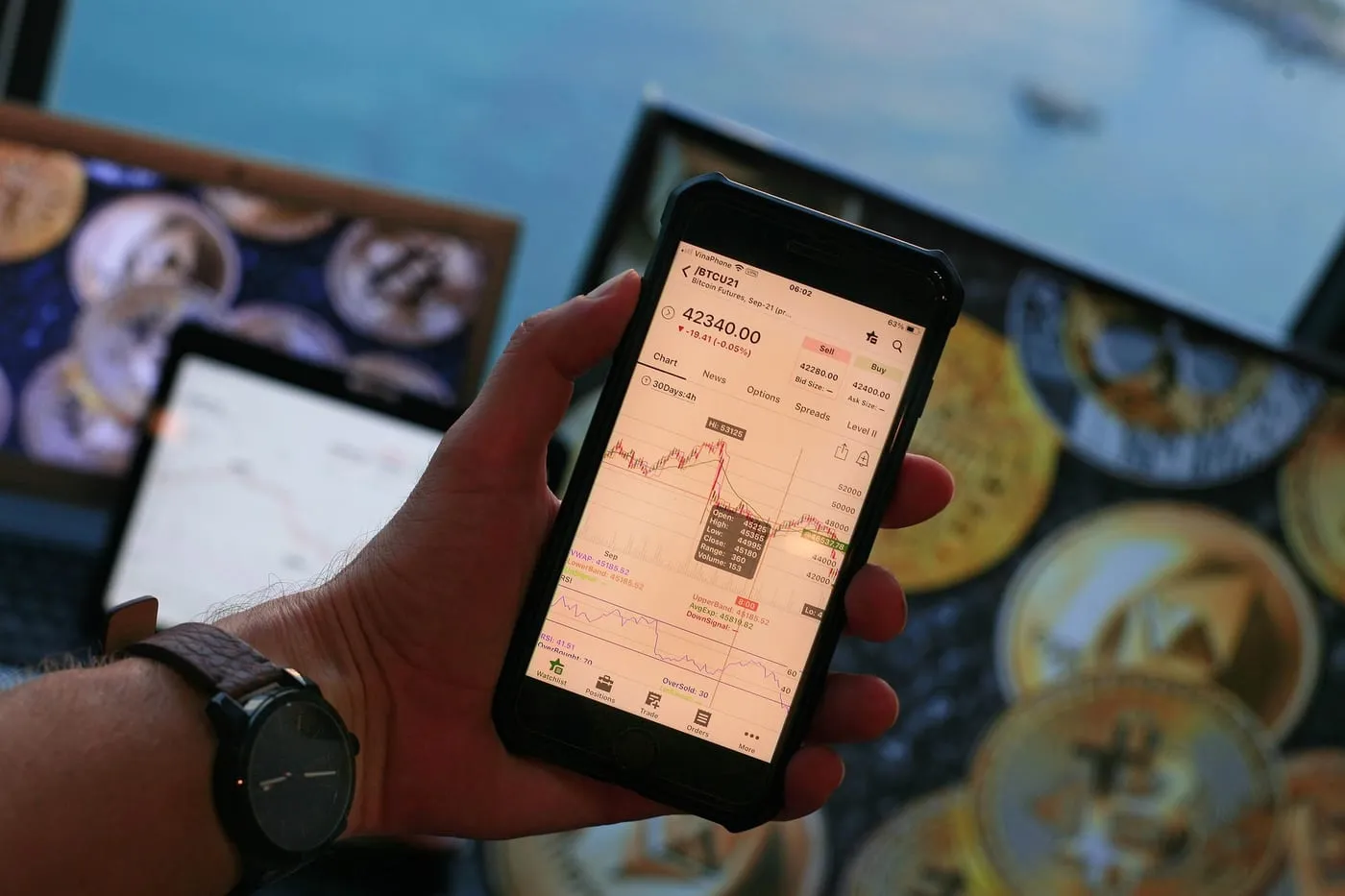
A crypto earn app is not simply a website in a smaller frame. The form factor changes what the provider can show you, what it chooses to show you, and when. Rates that a web product would publish in a table become a number rendered inside a logged-in session. Terms that a web page would display beside the offer become a link to a document nobody opens on a phone. Promotional mechanics that a website has to wait for you to visit become a notification that arrives while you are doing something else.
None of that makes apps worse. Several of the best-disclosed products in our research are app-first, and the cheapest staking arrangement we found anywhere is on a banking app. But the questions you need to ask are different, and the answers are harder to obtain before you have already handed over identity documents. This page is about the form factor rather than about ranking providers — the rankings live on crypto earn platforms.
Key takeaways
- App-first providers often publish no rate table at all. Revolut states that its per-asset staking APYs are shown in-app only, so no outside comparison is possible before you register.
- Revolut states it takes zero platform commission and passes on all rewards received on-chain, with third-party validators taking up to 3% before that — the cheapest arrangement in our survey.
- SwissBorg names the individual strategies behind each yield — Lido, Morpho, Maple, Kyros — and rates each low, medium or high, but tier multipliers create spreads of roughly two to ten times on the same strategy.
- Bitpanda advertises 7% on USDC as a 3% contractual base plus a bonus granted at its sole discretion, and states that the product is unregulated and that ownership of the assets passes to Bitpanda.
- What an app cannot show you is the entity name, the full terms and the fee schedule. Those decide what happens when something goes wrong.
The three app archetypes
Almost every crypto earn app is one of three things, and the differences are structural rather than cosmetic.
The exchange app is a full trading venue with earn products attached. It has the widest asset list, the most product types — flexible, locked, staking, structured — and the most granular tiering. Binance operates five distinct earn mechanisms under one label, including a structured product that is not principal-protected. The disclosure is usually the best of the three in absolute terms, because exchanges maintain help centres and terms, but it is also the most fragmented across pages.
The broker or neobank app puts crypto beside current accounts, cards and shares. It is the archetype most people actually use, it converts non-crypto customers better than anything else, and it discloses the least. Revolut, SwissBorg and Bitpanda are the three cases our research covers in detail.
The self-custodial wallet holds your keys and connects to protocols. There is no company to become insolvent and no tier system, and the rates are whatever the protocol pays. In exchange you carry smart-contract risk, transaction costs and complete responsibility for a recovery phrase. It is the only archetype where losing the phone can be fatal to the position, and the only one where nobody can help you.
Three named cases worth studying
Revolut: the zero-commission case
Revolut states that it gives users all of the staking rewards it receives on-chain and does not take a cut, with third-party validators taking up to 3% of gross rewards before that point. If accurate, that is the cheapest staking in our survey by a wide margin, against roughly 35% at Coinbase and up to 50% on Uphold flexible staking. It stakes ETH, DOT, SOL, ATOM, ADA, KSM, INJ, NEAR, ALGO and XTZ, with POL added for UK and EEA users, and pays daily or weekly depending on the token.
The app-specific problem sits alongside it. The headline is "up to 22% APY", which Revolut itself describes as an expected annualised return based on historical data and indicative only, and the per-asset figures are shown in the app. A 22% figure on that asset list almost certainly reflects one small-capitalisation token rather than anything typical. Lock-up and unbonding periods are token-dependent, shown in-app, and rewards do not accrue during them. Staking is offered in the UK and EEA and not in the US, and crypto is not covered by the Financial Services Compensation Scheme. Our Revolut review goes through it line by line.
SwissBorg: the named-strategy case
SwissBorg does something almost no other consumer app does: it names the protocol behind each yield. Its Earn strategies include ETH via Lido, USDC via Morpho, Maple Finance, SOL and JTO via Kyros, and DOT staking, and each carries a low, medium or high risk label. That means the yield source is verifiable on-chain rather than taken on trust — and it also means you carry smart-contract and protocol risk on top of counterparty risk, which the risk labels are there to signal.
The tiering is the catch, and it is large. Published ranges include DOT staking at 0.878% to 4.092%, USDC via Morpho at 1.018% to 2.036%, SOL via Kyros at 1.489% to 13.101% and JTO via Kyros at 15.553% to 31.106%. The spread between lowest and highest tier runs from roughly two to ten times, and tiers depend on holding SwissBorg's own token. Most strategies carry a 24-hour lock-in and pay daily with compounding. The full picture is in our SwissBorg review.
Bitpanda: the explicit-disclosure case
Bitpanda publishes the clearest risk language of any provider in this research, and it is worth reading precisely because it is uncomfortable. Its stablecoin Earn product advertises 7% on USDC and EURCV, composed of a 3% fixed base reward plus a variable bonus "granted voluntarily and at Bitpanda's sole discretion" that may change in 14-day cycles — so the contractual rate is 3%. It states that ownership of the assets passes to Bitpanda for the term of the transaction, that the offering entity is Bitpanda GmbH in Vienna, and that this is an unregulated product with no deposit protection and exposure to counterparty, insolvency and de-pegging risk.
Its staking is a separate business: genuine validator pass-through with an undisclosed commission, rewards credited weekly and automatically restaked, no lock-in except on ETH, and a 14-day lock on stablecoin redemptions. Bitpanda holds a MiCAR licence announced in January 2025, and the stablecoin product sits outside it. That combination — a licensed firm labelling one of its own products unregulated — is the single most instructive disclosure on this page. See the Bitpanda review.
What you cannot see inside an app
Four things, and each of them decides an outcome that the interface never mentions.
The first is the contracting entity. Apps show a brand; terms name a company. Bitpanda's stablecoin Earn is offered by Bitpanda GmbH in Vienna. Coinbase moved EEA crypto services to Coinbase Luxembourg S.A., with Luxembourg law now governing. Which entity holds your claim determines which court you are in and which register you can check.
The second is the fee schedule. Several app-first providers do not publish one. Bitpanda deducts a commission before distribution and does not state the amount. SwissBorg links to a separate pricing policy. Crypto.com's staking page states that its APRs exclude the fees Crypto.com charges, and does not publish that fee.
The third is the full rate structure. A single in-app number hides tapers and tiers. Bybit pays 12% on the first 500 USDT and 0.28% above 1,000. Crypto.com pays the full rate on the first US$3,000, half that on the next US$27,000 and 0.3 times that again above US$30,000. An app can truthfully show a headline while the blended rate on a realistic balance is a fraction of it.
The fourth is what happens in insolvency. No app in this category carries deposit protection. Custody insurance, where it exists, covers custodian failure or theft and not platform insolvency or lending losses. That distinction is the one that mattered most to the customers of the lenders that failed, as set out on what happened to the CeFi lenders.
| Question | Exchange app | Broker or neobank app | Self-custodial wallet |
|---|---|---|---|
| Who holds the claim | The exchange group entity for your region | A named subsidiary, often in a third country | Nobody — you hold the position directly |
| Where rates are published | Usually on the web, fragmented across pages | Frequently in-app only | On-chain and independently observable |
| What funds the yield | Staking pass-through, lending, or promotion | Validators, named protocols, or a loan to the issuer | Borrower demand on a utilisation curve |
| Fee disclosure | Commonly published as a percentage of rewards | Often undisclosed or in a separate policy | Protocol fees are public; gas is yours |
| Lock-up visibility | In product terms, per product | Inside the flow, per token | Determined by the chain, not the app |
| Recourse if it fails | Unsecured creditor | Unsecured creditor | None at all |
Compiled from provider documentation and terms for Binance, Coinbase, Revolut, SwissBorg, Bitpanda, Wirex and Aave. Checked 16 September 2026.
Promotional mechanics that favour the provider
Notifications change behaviour, which is why earn promotions on mobile are built around them. The pattern is consistent: a time-limited boost, a quota, a daily action, and a reward that requires opening the app. Bybit distributes voucher-based rate boosters through a rewards hub that it describes as stackable to around 60%. CEX.IO launched a Reward Center around March 2026 with two daily spins for crypto or fee credits, claimed manually, with no published odds. Crypto.com's 2026 card overhaul means users who neither stake CRO nor pay a subscription earn 0% cashback, with qualifying lock-ups from $500 to $1,000,000 on twelve-month commitments.
The asymmetry is that each of these mechanics increases session frequency, and session frequency increases trading. The reward is small, bounded and paid once; the behaviour it creates is durable. That is a reasonable trade if you were going to trade anyway, and a poor one if the notification is what prompts it. Turning promotional notifications off while leaving security alerts on is the single most useful setting change in any of these apps.
What the form factor does well
- Onboarding, verification and funding happen in one session, which removes the main reason people never start.
- Push notifications surface rate and term changes that web-only users routinely miss in email.
- Biometric authentication and device binding are genuinely stronger than a password on a shared computer.
- The better app-first providers compete on fees rather than headline rates: Revolut states it takes no commission on staking.
- Daily accrual with automatic compounding is common — Bitpanda credits weekly and restakes automatically, SwissBorg pays daily with compounding.
What the form factor costs you
- Rates shown only in-app cannot be compared, archived or checked before you hand over identity documents.
- Tier mechanics that halve or multiply your yield are usually several screens deep in settings.
- The contracting entity and the full terms are typically a link out to a web page nobody reads on a phone.
- Lock-up and unbonding periods are disclosed per token inside the flow rather than in a table you can study.
- App stores host convincing clones, and a fake wallet app looks identical to the real one at thumbnail size.
Clone apps and the store problem
A fake app is more convincing than a fake website, because the store provides the trust signals rather than the domain name. Icons and screenshots can be copied exactly, reviews can be manufactured, and at thumbnail size a clone is indistinguishable from the original. The objective is almost always a recovery phrase or a wallet connection, because either one transfers everything at once.
Three habits remove most of the risk. Install from a link on the provider's own website rather than from a store search. Check the developer name against the company name in the terms, not against the brand. And never enter a recovery phrase into an application you installed because of an advertisement, a message or a reward offer, because no legitimate product ever needs one for that reason. Airdrop and claim phishing is a primary vector inside the $3.1 billion of crypto scam losses Hacken recorded for the first half of 2025, and app stores are one of its delivery channels.
A checklist for evaluating an earn app
Before funding anything, work through six items. Find the entity name in the terms and check whether it appears in a register you can search. Find the sentence explaining what funds the yield, and if there is not one, record that as the answer. Find the fee, and whether the displayed rate is gross or net of it. Find the tier table and work out your blended rate at the balance you actually intend to hold, rather than at the top tier. Find the lock-up and what breaking it costs — forfeited rewards are the norm. And find out what happens if the provider fails, which for everything in this category means confirming that you become an unsecured creditor.
That pass takes about ten minutes and is the same one we apply on where to earn crypto, adapted for a smaller screen. If the app will not let you answer those six questions before you deposit, the answer to the seventh — whether to deposit — is already available. For the wider question of which method suits you at all, start with how to earn crypto, and for the one-off promotional side of mobile products, earn free crypto covers what those campaigns are really paying for.
Frequently asked questions
What is the best app to earn crypto?
There is no single best, because the three app archetypes solve different problems. An exchange app gives you breadth of assets and the deepest product range with concentrated counterparty risk. A broker or neobank app gives you the simplest experience and the thinnest disclosure. A self-custodial wallet gives you control and no company to fail, in exchange for smart-contract risk and no support line. Choose the archetype first, then compare within it using our platform reviews.
Why do earn apps not publish their rates online?
Partly because the rates move, and partly because in-app disclosure is easier to vary by country, by tier and by user. Revolut states explicitly that its APYs are indicative, based on historical data, and shown in the app. The practical consequence is that you cannot compare the product against alternatives before completing registration and identity verification, which reverses the normal order of a financial decision. Where a provider will not publish a rate table, treat the headline "up to" figure as the ceiling for one asset rather than a typical outcome.
Are crypto earn apps safe?
The app is rarely the weak point; the product behind it is. Biometric login and device binding are strong, but they do not change what happens if the provider becomes insolvent, and no app in this category carries a deposit guarantee. Bitpanda is unusually plain about this, stating that its stablecoin Earn product is unregulated, that ownership of the assets passes to Bitpanda for the term, and that no deposit protection applies. Read crypto earn risks before treating a clean interface as a safety signal.
How do I avoid fake crypto earn apps?
Install only from a link on the provider's own website rather than from a search result in the store, check the developer name and the install count, and treat a newly published app with a familiar logo as hostile. Never restore an existing wallet into an app you have just installed on the strength of an advertisement, and never enter a recovery phrase into anything that is not the wallet you deliberately chose. Airdrop and claim phishing sits inside the $3.1 billion of crypto scam losses Hacken recorded for the first half of 2025.
Do app earn rates differ from web rates at the same provider?
They can, because rates vary by country, by tier and by product, and the app knows which of those you are. Coinbase states that its USDC rewards rate can vary by region and may change at any time, with changes typically effective on the first calendar day of the month. Kraken has shown different figures for the same asset across two products on its own site. The rate you see is the rate for your account rather than a published price, which is why screenshots age badly. Our interest rates page records the conditions attached to each headline.
Which app has the lowest fees for staking?
On the evidence in this research, Revolut, which states that it takes no platform commission and gives users all the staking rewards it receives on-chain, with third-party validators taking up to 3% of gross rewards before that point. For comparison, Coinbase charges roughly 35% as standard and Uphold up to 50% on flexible staking. A zero commission does not make the position risk-free, and Revolut's per-asset rates and lock-up periods are visible only in the app. See our Revolut review.
Can I earn crypto on an Android or iPhone without an exchange account?
Yes, through a self-custodial wallet that connects to lending protocols directly. That removes company insolvency risk and replaces it with smart-contract risk, gas costs and the absolute responsibility for your own recovery phrase. It is a reasonable choice for people who already understand the mechanics and a poor first step for anyone who does not, because the mistakes are irreversible and there is no support desk. DeFi yield farming covers what you take on.
Keep reading
Revolut staking review
Zero platform commission, in-app rates, and what the 22% headline means.
SwissBorg Earn review
Named strategies, risk ratings, and tier multipliers of two to ten times.
Bitpanda review
The clearest risk disclosure in CeFi, including a product it calls unregulated.
Crypto earn platforms
Fifteen providers reviewed against the same checklist, web and mobile.
Earn free crypto
Promotions, quests and referrals, with realistic amounts and risks.
Where to earn crypto
The five venue types and a ten-minute diligence pass for any of them.